
Does Seborrheic Keratosis Removal Leave a Scar?
Seborrheic keratosis is a common benign skin growth that many people choose to remove for cosmetic reasons, irritation, or reassurance. One of the most frequent concerns patients have before treatment is whether removal will leave a permanent scar.
In this article, we explain whether scarring can occur after seborrheic keratosis removal and what influences the final cosmetic outcome.
Does Seborrheic Keratosis Removal Always Cause a Scar?
Any procedure that disrupts the skin has the potential to leave a mark while healing. However, the visibility and permanence of a scar depend on several factors, including the removal method used, the size of the lesion, its location, and individual healing characteristics.
In many cases, the treated area heals with minimal visible change. Over time, any initial redness or pigmentation typically fades significantly.
How Different Removal Methods Affect Scarring
The risk and appearance of scarring vary depending on the treatment technique, the size of the lesion, and the area of the body being treated. In most cases, any residual mark is small and significantly less noticeable than the original raised or pigmented growth.
Cryotherapy
Cryotherapy freezes the lesion, causing it to blister and crust before healing. Because there is no surgical incision, permanent scarring is uncommon. However, pigment changes, either lighter or darker patches, can occur, particularly in darker skin types. These colour changes are usually more noticeable than textural scarring.
Laser Treatment
Laser removal precisely targets superficial tissue. Healing often results in a smooth skin surface, especially for thinner lesions. As with cryotherapy, pigment changes can occur, and deeper lesions may carry a slightly higher risk of mild textural change. Visible scarring is typically minimal when the lesion is superficial.
Shave Removal
Shave removal involves excising the lesion at skin level under local anaesthetic. This leaves a small superficial wound that heals over one to two weeks. A faint, flat mark may remain initially, but this often fades gradually over several months and is usually far less prominent than the original lesion.
Surgical Excision
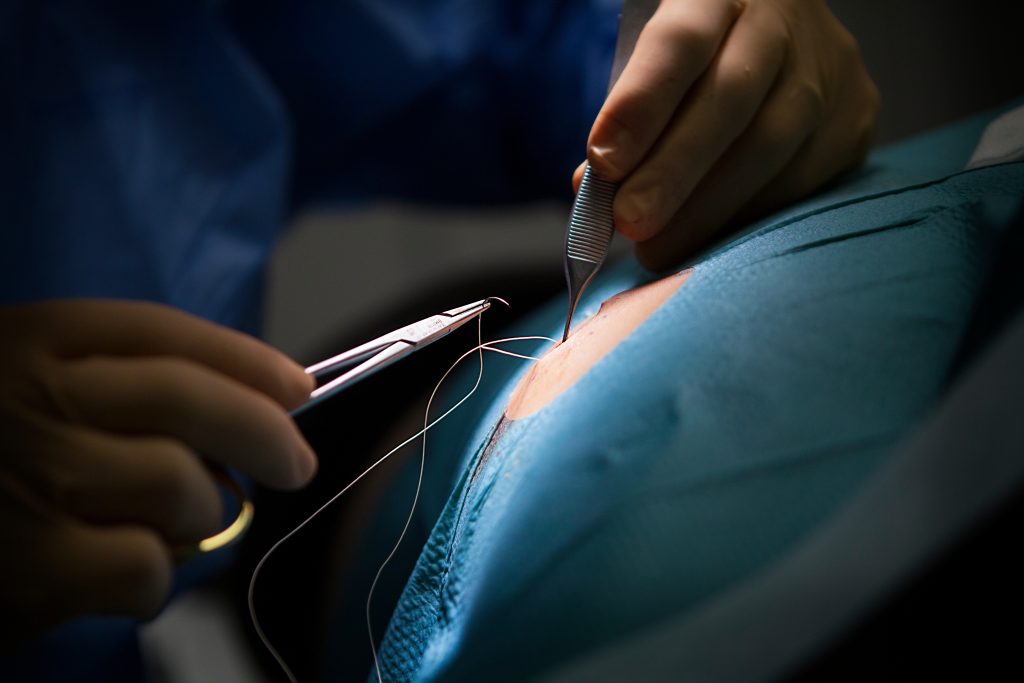
Surgical excision removes the lesion in a controlled manner and usually involves sutures. A small linear scar is expected because the skin edges are brought together to heal. In most cases, this scar softens and fades with time, becoming significantly less noticeable after several months. For thicker or atypical lesions, this approach provides complete removal and diagnostic certainty, with the trade-off of a fine, predictable scar.
What Does Seborrheic Keratosis Removal Involve at Waverley Park?
At Waverley Park Minor Surgery Clinic, seborrheic keratosis removal is carried out in a controlled minor surgery setting with a focus on diagnostic accuracy, precision, and predictable cosmetic healing.
Consultation and Clinical Assessment
Your appointment begins with a detailed clinical assessment. Each lesion is carefully examined to confirm that it is consistent with seborrheic keratosis and to exclude more serious conditions. The size, thickness, location, and cosmetic considerations are discussed, and the removal technique is explained clearly so you can make an informed decision.
Local Anaesthetic and Controlled Removal
Removal is performed under local anaesthetic to ensure comfort. Once the area is fully numb, the lesion is removed using a precise surgical technique. Where surgical excision is indicated, the growth is removed under direct visual control, and the wound is closed carefully with sutures if required. The procedure is typically completed in a single session.
Histological Confirmation
Where excision is performed, all removed tissue is sent for histological analysis. This provides laboratory confirmation of the diagnosis and ensures that no unexpected pathology is present. Both you and your GP are informed of the results.
Aftercare and Recovery
You will leave with clear written aftercare instructions. Healing time depends on the technique used and the size of the lesion, but most patients return to normal daily activities immediately. If sutures are placed, they are removed at follow-up.
What Influences the Final Cosmetic Outcome?
Several factors affect how the skin heals after seborrheic keratosis removal:
- The size and thickness of the lesion
- The anatomical location
- The removal technique used
- Individual skin type and healing response
- Adherence to aftercare instructions
Areas with tighter skin or higher tension may heal differently from areas with more flexibility. Following professional aftercare guidance significantly reduces the risk of noticeable scarring.
How Long Does It Take for a Scar to Fade?
Most removal sites appear pink or slightly raised during early healing. This is part of the normal inflammatory phase. Over the following weeks and months, the skin gradually remodels.
For many patients, visible redness improves within several weeks, and the scar continues to soften and fade over three to six months. Final cosmetic appearance can take up to a year to fully settle.
Can Scarring Be Minimised?
Scarring cannot be eliminated entirely, but it can often be minimised through:
- Appropriate technique selection
- Gentle surgical handling
- Careful wound closure where required
- Proper aftercare and sun protection during healing
Avoiding unnecessary friction and protecting the area from ultraviolet exposure while healing can also support a better cosmetic outcome.
Why Choose Waverley Park Minor Surgery Clinic for Seborrheic Keratosis Removal?
At Waverley Park Minor Surgery Clinic, seborrheic keratosis removal is performed with a clear focus on diagnostic accuracy, controlled surgical technique, and optimal cosmetic healing. While these lesions are benign, careful assessment and precise removal are important to ensure complete treatment with minimal visible scarring.
Experienced Minor Surgery Expertise
With over 20 years of experience in minor surgical procedures, our clinicians specialise in the careful excision of benign skin lesions. Procedures are carried out under local anaesthetic in a fully equipped clinical setting, ensuring comfort, safety, and meticulous technique. Our approach prioritises complete removal while preserving surrounding healthy skin.
Thorough Assessment Before Treatment
Every lesion is examined in detail during consultation. We assess its size, thickness, borders, and pigmentation to confirm the diagnosis and exclude more serious conditions. Where appropriate, removed tissue is sent for histological analysis to provide formal laboratory confirmation and additional reassurance.
Precision Technique with Cosmetic Awareness
Seborrheic keratoses often develop on visible areas such as the face, scalp, chest, or back. Our surgical technique emphasises gentle tissue handling, precise depth control, and careful wound closure to support smooth healing and minimise scarring wherever possible.
Structured Aftercare and Ongoing Support
Clear written and verbal aftercare guidance is provided to support optimal recovery. If sutures are placed, removal is arranged at an appropriate interval, and our team remains available should you have any concerns during healing.
Frequently Asked Questions
Do seborrheic keratoses scar when you remove them?
Seborrheic keratosis removal can leave a small mark, but significant scarring is uncommon when the procedure is performed carefully. The visibility of any scar depends on the technique used, the size of the lesion, and individual healing characteristics. In most cases, any residual mark is subtle and less noticeable than the original growth. Over time, scars typically soften and fade.
How long does it take to heal after seborrheic keratosis removal?
Healing time depends on the removal method and the size of the lesion. Superficial treatments such as cryotherapy or laser therapy usually settle within one to three weeks. Shave removal and surgical excision may take one to two weeks for initial healing, with continued scar maturation over several months. Most patients return to normal daily activities immediately after treatment.
What should you do after seborrheic keratosis removal?
After removal, it is important to keep the area clean and dry as advised. You may be asked to avoid friction, excessive stretching of the area, or strenuous activity for a short period. If sutures are placed, follow-up removal will be arranged. Protecting the healing site from sun exposure can help reduce pigment changes and support optimal cosmetic results.
Can seborrheic keratosis be lasered off?
Laser treatment can be used to remove certain superficial seborrheic keratoses. The laser ablates the lesion while minimising disruption to surrounding tissue. However, laser treatment does not preserve tissue for histological analysis and may not be suitable for thicker, raised, or diagnostically uncertain lesions.
At Waverley Park Minor Surgery Clinic, surgical excision is the preferred treatment method, as it allows complete removal under direct visual control and provides tissue for laboratory confirmation, ensuring both diagnostic certainty and predictable healing.
How can you reduce the appearance of seborrheic keratosis scars?
Most scars improve naturally over time as the skin remodels. Keeping the area protected from sun exposure during healing is important, as ultraviolet light can worsen pigmentation changes. Following aftercare advice and avoiding unnecessary irritation supports better cosmetic outcomes. If a scar remains noticeable, further clinical advice can be provided on management options.
Leave a reply