
What Is the Main Cause of Seborrheic Keratosis?
Seborrheic keratosis is one of the most common benign skin growths seen in adults. These raised, often pigmented lesions can appear gradually over time and may increase in number with age. Although they are harmless, many patients want to understand why they develop in the first place.
In this article, we explain the main underlying causes of seborrheic keratosis, the role of ageing and genetics, whether sun exposure contributes, and why these lesions tend to become more common over time.
Is There a Single Main Cause?
There is no single trigger responsible for seborrheic keratosis. Instead, it is believed to result from a combination of biological and environmental influences.
The most significant factors include:
- Natural ageing of the skin
- Genetic predisposition
- Long-term sun exposure
These elements work together over time, which is why seborrheic keratoses are most prevalent in ageing skin.
What Contributes to the Development of Seborrheic Keratosis?
Seborrheic keratosis does not have a single cause. Instead, it develops due to a combination of age-related skin changes, inherited factors, and environmental influences.
Ageing and Skin Cell Changes
Ageing is the strongest risk factor. Seborrheic keratoses are uncommon in children and young adults but become increasingly frequent from the age of 30 onwards.
As the skin ages, normal cell turnover and regulation can alter. Seborrheic keratosis forms when certain epidermal cells multiply in a localised area, creating a raised lesion with a waxy or slightly rough surface. These growths are benign and remain confined to the outer layer of the skin.
In the UK, approximately 30% of people have at least one seborrheic keratosis by the age of 40. This increases to around 75% by the age of 70, highlighting the strong association with ageing.
Genetic Predisposition
Genetic factors are considered a contributor to the development of seborrheic keratosis. A positive family history is commonly reported, suggesting a hereditary component in susceptibility to these lesions.
Individuals with affected first-degree relatives appear more likely to develop seborrheic keratoses themselves, often presenting with multiple lesions over time. This predisposition is thought to reflect inherited patterns of epidermal cell proliferation and differentiation, which influence how keratinocytes behave as the skin ages.
Sun Exposure
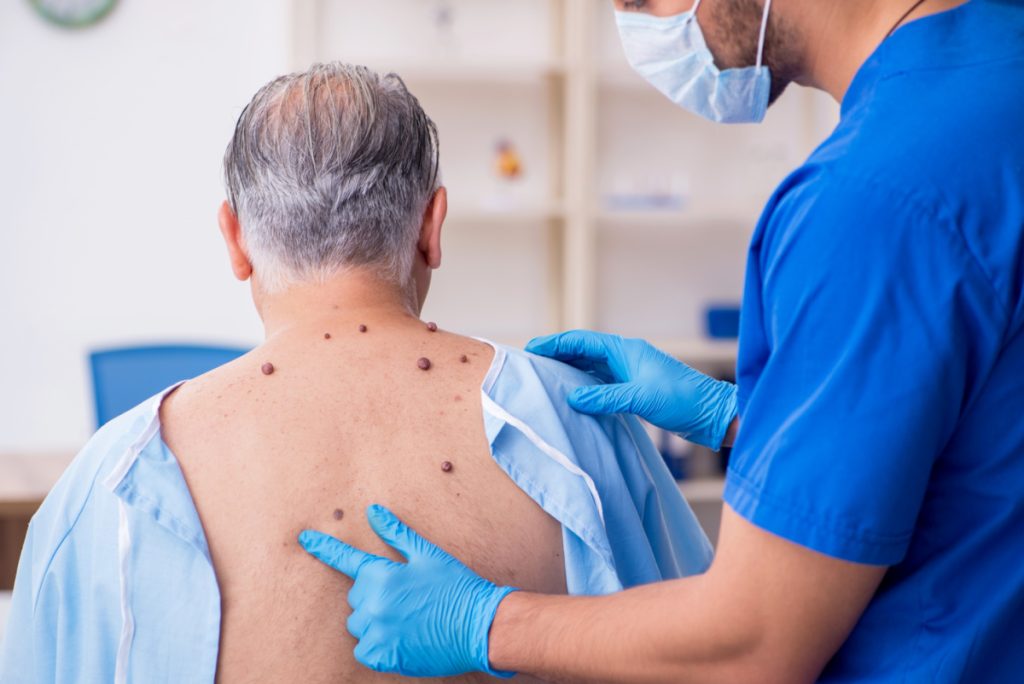
Seborrheic keratoses can occur on areas that are not regularly exposed to sunlight, but they are commonly found on the face, chest, shoulders, and back. This distribution suggests that ultraviolet exposure may contribute to their development.
Cumulative sun damage can influence skin cell growth patterns over decades. While sun exposure is not the sole cause, it may act as a contributing factor in individuals who are already predisposed due to age or genetics.
Can Hormones or Medical Conditions Cause Seborrheic Keratoses?
There is no strong evidence that hormonal changes directly cause seborrheic keratosis. However, some people notice an increase in number during periods of hormonal fluctuation, such as pregnancy.
In rare cases, the sudden appearance of numerous seborrheic keratoses can be associated with an underlying medical condition. This is uncommon but highlights the importance of professional assessment if lesions appear rapidly or change unexpectedly.
What Do Seborrheic Keratoses Look Like?
Seborrheic keratoses typically present as:
- Waxy, slightly rough, or verrucous raised patches
- Tan, brown, dark brown, or black in colour
- Well demarcated with a characteristic “stuck on” appearance
- Round or oval-shaped
They can occur as solitary lesions or in clusters and often gradually thicken or become more raised over time.
When Should You Seek Medical Advice?
Although seborrheic keratoses are benign, some skin cancers can resemble them. You should seek professional assessment if a lesion:
- Changes rapidly in size, colour, or shape
- Has irregular borders
- Bleeds without friction
- Becomes persistently painful
Accurate diagnosis ensures appropriate management and reassurance.
Can Seborrheic Keratosis Be Prevented?
Because ageing and genetics are key factors, complete prevention is not possible. However, protecting your skin from excessive sun exposure may help reduce the risk of developing additional lesions.
Practical steps include:
- Using appropriate sun protection
- Avoiding prolonged UV exposure
- Monitoring your skin regularly
Early identification allows timely review if removal is desired.
Treatment Options
Seborrheic keratosis does not require medical treatment unless it becomes irritated, symptomatic, or cosmetically concerning. Removal options include cryotherapy, shave removal, laser treatment, or surgical excision.
At Waverley Park Minor Surgery Clinic, seborrheic keratoses are removed using careful surgical excision under local anaesthetic. Removed tissue is sent for histological analysis to confirm the diagnosis and provide reassurance.
What Does Seborrheic Keratosis Removal Involve?
When seborrheic keratosis removal is appropriate, treatment is carried out in a controlled minor surgery setting. The process follows several clear stages to ensure accurate diagnosis, safe removal, and predictable healing.
Step 1: Clinical Evaluation
Each lesion is examined carefully to confirm that it is consistent with seborrheic keratosis. If there is any uncertainty about the diagnosis, this is addressed before proceeding. The procedure, healing expectations, and potential cosmetic outcome are explained so you can make an informed decision.
Step 2: Local Anaesthetic
A small injection of local anaesthetic is given to numb the area completely. You may feel brief stinging during the injection, but once numb, the procedure itself is comfortable.
Step 3: Precise Removal
The lesion is removed using careful surgical excision. The technique allows controlled removal while preserving surrounding healthy skin. If required, a small stitch may be placed, depending on the size and location of the lesion.
Step 4: Laboratory Confirmation
All removed tissue is sent for histological analysis. This confirms the diagnosis and provides an added level of reassurance that the lesion is benign.
Step 5: Dressing and Aftercare
A dressing is applied before you leave the clinic. You will receive clear written aftercare instructions. Most sites heal within one to two weeks, and patients can usually return to normal daily activities immediately after the procedure.
How Much Does Seborrheic Keratosis Removal Cost?
Seborrheic keratosis removal at Waverley Park Minor Surgery Clinic costs £350. If multiple lesions are treated during the same appointment, a reduced rate is available. The exact fee depends on the number, size, and location of the lesions being removed.
An initial consultation costs £50, which is fully deducted from your treatment fee if you proceed with removal.
All pricing is confirmed clearly at your consultation, allowing you to make an informed decision with transparent guidance before treatment takes place.
Why Choose Waverley Park Minor Surgery Clinic for Seborrheic Keratosis Treatment?
At Waverley Park Minor Surgery Clinic, seborrheic keratosis removal is delivered with clinical precision, diagnostic clarity, and careful attention to cosmetic outcome.
Experienced Minor Surgery Expertise
With over 20 years of experience in minor surgical procedures, our clinicians specialise in the precise removal of benign skin lesions. All treatments are carried out under effective local anaesthetic in a fully equipped clinical setting, ensuring a safe, comfortable, and controlled environment.
Detailed Clinical Assessment
Every lesion is assessed thoroughly during consultation. We evaluate its appearance, borders, pigmentation, and clinical features to confirm the diagnosis and exclude more serious skin conditions. If there is any uncertainty, this is addressed before treatment proceeds, ensuring safe and appropriate care.
Precision Removal with Cosmetic Awareness
Seborrheic keratoses often occur on visible areas such as the face, scalp, chest, or back. Our technique prioritises careful tissue handling and precise excision to support smooth healing and minimise scarring wherever possible.
Histological Confirmation and Ongoing Support
Where appropriate, removed tissue is sent for laboratory analysis to confirm the diagnosis. Both you and your GP are informed of the results, providing continuity of care and additional reassurance.
You will also receive clear written and verbal aftercare guidance, and our team remains available should you need advice during recovery.
Frequently Asked Questions
Why have I got so many seborrheic keratoses?
Seborrheic keratoses become more common with age and are strongly influenced by genetics. If you have a family history of these lesions, you are more likely to develop multiple growths over time. Some individuals are simply predisposed to forming them due to inherited patterns of skin cell behaviour. Sun exposure may also contribute to the number that develop.
What are the risks of removing seborrheic keratosis?
Removal is generally safe when performed in a clinical setting. Potential risks include mild bleeding, infection, temporary redness, scarring, or changes in skin pigmentation. These risks are usually minimal when the procedure is carried out by an experienced clinician and aftercare advice is followed carefully.
How do I get rid of seborrheic keratosis?
Seborrheic keratoses can be removed through medical treatments such as cryotherapy, shave removal, laser treatment, or surgical excision. The most appropriate method depends on the size, thickness, and location of the lesion.
At Waverley Park Minor Surgery Clinic, removal is performed using careful surgical excision under local anaesthetic, allowing controlled treatment and laboratory confirmation of the diagnosis.
Will the NHS remove seborrheic keratosis?
Seborrheic keratosis is a benign condition, so removal on the NHS is generally reserved for cases where there is diagnostic uncertainty or significant clinical symptoms. Lesions removed for cosmetic reasons are usually treated privately.
Will seborrheic keratosis grow back if removed?
No. When a seborrheic keratosis is completely removed, that specific lesion does not regrow in the same location. However, new lesions may develop elsewhere over time, particularly in individuals who are genetically predisposed.
Leave a reply