
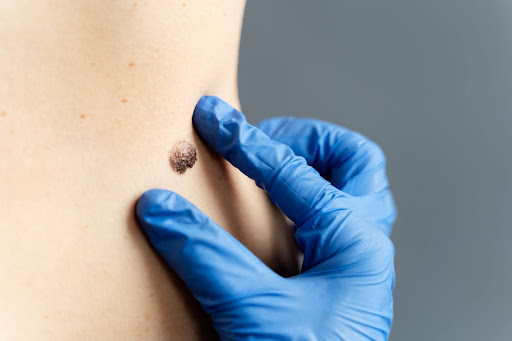
Can I Get a Cancerous Mole Removed Privately?
Can I Get a Cancerous Mole Removed Privately?
Moles are a common skin feature, most of which are benign. However, some moles can develop into melanoma, a serious form of skin cancer, making early detection and expert assessment important. Patients often have questions about whether it is possible to have a mole removed privately, particularly when there are concerns about potential malignancy or when cosmetic appearance is a consideration.
This article explains when to seek professional evaluation, how NHS mole removal works, and the options available through private clinics, such as Waverley Park Minor Surgery Clinic.
This article is one of a series of blogs on mole removal. For a full overview covering costs, procedure, scarring and recovery, visit our Complete Guide to Mole Removal.
When to Seek Professional Assessment for a Mole
Melanoma can often be treated very successfully when identified early, with survival rates exceeding 90%. This is why any mole that changes in appearance should be assessed promptly by a healthcare professional.
The ABCDE criteria can help identify moles that warrant professional evaluation:
- Asymmetry: One half of the mole differs from the other
- Border irregularity: Edges appear jagged, blurred, or uneven
- Colour changes: Variations in colour or sudden changes in pigmentation
- Diameter: Larger than 6mm, roughly the size of a pencil eraser
- Evolving: Any change in size, shape, colour, or texture
Moles that bleed, itch, or develop crusts should also be assessed promptly. If you notice any of these warning signs, arrange a consultation with your GP as soon as possible.
Melanoma in People With Brown or Black Skin
Melanoma can present differently in people with brown or black skin and may be more difficult to recognise using the standard ABCDE criteria. In these individuals, melanoma is less likely to appear as a typical dark, irregular mole and may instead:
- Appear symmetrical and lack obvious colour variation
- Present as a non-healing sore or ulcerated area
- Be pink, red, or skin-coloured rather than brown or black
- Develop under a fingernail or toenail
- Occur on the palms of the hands, soles of the feet, or around the nail bed
Because these presentations can be subtle, any persistent, changing, or unexplained skin lesion should be assessed promptly by a GP, regardless of skin tone. Early professional evaluation remains critical for timely diagnosis and treatment.
When the NHS Will Remove a Mole
The NHS prioritises medical need over cosmetic concerns. Mole removal is generally covered if the lesion is:
- Suspicious for melanoma or other skin cancer: exhibiting ABCDE warning signs (Asymmetry, Border irregularity, Colour changes, Diameter over 6mm, Evolving) or any rapid changes.
- Causing medical problems: irritation, bleeding, or discomfort.
In these cases, your GP will examine the mole and determine whether specialist assessment or removal is required. For moles that are purely cosmetic and show no signs of malignancy, the NHS generally does not cover removal, and private clinics are the appropriate option.
Private Mole Removal: A Faster and Flexible Option
For cosmetic or non-urgent mole removal, private clinics offer a quicker and more individualised approach. Specialist practices such as Waverley Park Minor Surgery Clinic provide thorough assessment and a range of treatment options tailored to each patient.
However, medically, any mole that shows signs of skin cancer requires immediate and definitive removal through the NHS.
Comprehensive Clinical Assessment
Each mole is carefully examined during consultation, including dermatoscopic assessment to evaluate pigmentation, structure, and depth. This allows clinicians to identify features that may require further investigation or referral.
Appropriate Removal Techniques
Depending on the mole’s size, depth, location, and appearance, the most suitable method is recommended. Options include surgical excision or shave removal. Laser mole removal is not offered at Waverley Park, as it does not allow for histological assessment.
Reduced Waiting Times
Private appointments allow patients to avoid NHS waiting lists for non-suspicious moles, with consultations and treatment scheduled promptly.
Focus on cosmetic outcomes
Experienced GPs use precise surgical techniques and careful aftercare to minimise scarring while prioritising complete and safe removal.
Why Choose Waverley Park Minor Surgery Clinic for Mole Removal?
Waverley Park Minor Surgery Clinic in Glasgow offers medically supervised mole removal in a calm, professional setting. Our experienced GPs focus on accurate assessment, safe removal, and achieving dependable cosmetic results while maintaining patient comfort throughout.
Specialist Medical Expertise
With over 20 years of experience in minor surgery, our clinicians use evidence-based techniques and effective local anaesthesia to perform mole removal safely and precisely. Careful surgical planning and meticulous technique help minimise discomfort and reduce the risk of regrowth.
Bespoke Assessment and Treatment Approach
Each mole is assessed on its own merits, considering factors such as size, depth, location, and clinical appearance. This allows us to recommend the most appropriate removal method while preserving surrounding healthy skin. We explain the procedure clearly so patients understand what to expect at every stage.
Clear Aftercare Guidance and Ongoing Support
Patients receive clear, practical aftercare advice to support healing, protect the skin, and minimise scarring. Ongoing support is available during recovery, providing reassurance and helping achieve the best possible long-term outcome.[/vc_column_text][/vc_column][/vc_row]
Frequently Asked Questions
Will the NHS remove a mole?
The NHS will generally remove moles only if they are medically necessary. This includes moles that are suspicious for melanoma, showing changes in size, shape, or colour, or causing irritation, bleeding, or other health issues. Cosmetic mole removal is usually not covered and would need to be done privately.
How do you treat a cancerous mole?
Cancerous moles are typically removed using surgical excision under local anaesthetic. The removed tissue is sent for biopsy to confirm the diagnosis and determine if further treatment is needed. Early removal and assessment significantly improve outcomes.
How much does it cost to get a cancerous mole removed?
If the mole is suspicious for melanoma or poses a medical risk, removal on the NHS is free. For purely cosmetic mole removal, private clinics charge a fee. At Waverley Park Minor Surgery Clinic, cosmetic mole removal costs £500. The initial consultation fee is £50, which can be fully deducted from the cost of any procedure you decide to proceed with.
What does the mole removal procedure involve?
A mole removal procedure is usually performed under local anaesthetic. The clinician will carefully remove the mole using either surgical excision or shave removal. For suspicious or deeper moles, excision is preferred as it allows the tissue to be sent for biopsy, confirming whether the mole is cancerous.
How long does it take to heal after mole removal?
Healing time depends on the method used. Shave removal typically heals within 1–2 weeks, while surgical excision may take 2–3 weeks for the wound to close fully. Stitches, if used, are usually removed after 5–14 days. Following aftercare guidance is important to minimise scarring and reduce infection risk.
Leave a reply