
How Painful Is a Mole Removal?
One of the most common concerns patients have before mole removal is whether the procedure will be painful. The good news is that medical mole removal is designed to be as comfortable as possible and is generally well-tolerated. Most people are surprised by how quick and straightforward the process feels.
In this article, we explain what mole removal feels like, how pain is managed during and after the procedure, and what to expect during recovery so you can feel informed and reassured before your appointment.
This article is one of a series of blogs on mole removal. For a full overview covering costs, procedure, scarring and recovery, visit our Complete Guide to Mole Removal.
Does Mole Removal Hurt?
Mole removal is usually not painful because it is performed under local anaesthetic. This numbs the area completely, meaning you should not feel pain during the procedure itself. You may feel some pressure or gentle movement, but sharp or burning sensations are not expected once the anaesthetic has taken effect.
For most patients, the most noticeable sensation is the brief sting from the local anaesthetic injection, which typically lasts around 10 seconds. After this short period, the area becomes fully numb, allowing the mole to be removed comfortably and safely.
Is There a Difference in Pain Between Removal Methods?
The main differences between techniques relate to healing time, aftercare, and scarring rather than pain levels. Most patients report only mild tenderness afterwards, which settles quickly.
Shave Removal
Shave removal is commonly used for raised, benign moles that sit above the surface of the skin. After the area is numbed, the clinician removes the mole at skin level using a fine surgical blade. No stitches are required, and discomfort after the procedure is usually minimal. Healing is generally quick, with a flat, pale mark often remaining once fully healed.
Curettage
Curettage is suitable for certain superficial skin lesions and involves gently scraping away the surface of the mole using a specialised instrument, sometimes followed by cautery to control bleeding. It is not appropriate for deeper or suspicious moles.
Because it is performed under local anaesthetic, pain during the procedure is not expected, and post-procedure soreness is usually mild and short-lived.
Surgical Excision
Excision is recommended for deeper moles or when the entire lesion needs to be removed intact for pathology testing. The mole is removed surgically under local anaesthetic, and the wound is closed with sutures.
While the procedure itself should not be painful, there may be slightly more tenderness during recovery compared with shave removal. This method always leaves a fine linear scar but allows for the most thorough laboratory assessment.
Laser Mole Removal
Laser treatment may be used for some superficial pigment lesions, but it is not suitable for moles that require pathology assessment because it does not produce an intact tissue sample. For this reason, many medical clinics prioritise surgical techniques. Laser treatments can sometimes cause more post-procedure sensitivity or pigment changes compared with surgical removal.
At Waverley Park Minor Surgery Clinic, we focus on expert shave removal and surgical excision techniques. These methods allow for effective pain control, predictable healing, and full pathology assessment, ensuring mole removal is both safe and as comfortable as possible.
What Does the Local Anaesthetic Feel Like?
The local anaesthetic is injected around the mole to numb the surrounding skin. Patients usually feel a quick, sharp sting, often compared to a small pinch or bee sting, which lasts only a few seconds. Within moments, the area becomes completely numb.
Once the anaesthetic has taken effect, you should not feel pain during the mole removal itself. You may notice some pressure, pulling, or movement, but this should not be uncomfortable. The doctor will always check that the area is fully numb before starting and can administer additional anaesthetic if needed to ensure you remain comfortable throughout the procedure.
What Does Mole Removal Feel Like Afterwards?
Once the anaesthetic wears off, it is normal to experience mild soreness or tenderness at the treatment site. This is usually described as similar to a small cut or graze and is generally well controlled with simple pain relief such as paracetamol.
Discomfort is typically mild and short-lived, improving significantly within the first 24 to 48 hours. Most patients do not need strong pain medication and are able to return to normal daily activities very quickly.
How Does Professional Mole Removal Reduce Pain?
Professional mole removal is carefully planned and carried out in a clinical setting using sterile instruments and proven minor surgery techniques. Each mole is assessed in advance to choose the most appropriate removal method, ensuring minimal tissue trauma and discomfort while safely addressing any potentially cancerous tissue.
In contrast, DIY mole removal methods such as cutting, burning, freezing, or tying off are uncontrolled and unpredictable. They not only cause significantly more pain, inflammation, and prolonged healing, but they also risk missing cancerous changes entirely, since the tissue is not properly examined.
Precise surgical technique, effective local anaesthesia, and clear aftercare guidance all help keep pain to a minimum and support a smooth, safe recovery.
Mole Removal Consultation
The mole removal process begins with a thorough consultation to ensure your safety and determine the most suitable treatment.
- Initial consultation: Your appointment begins with a detailed discussion of your medical history, any symptoms you may have noticed, and your reasons for wanting the mole removed.
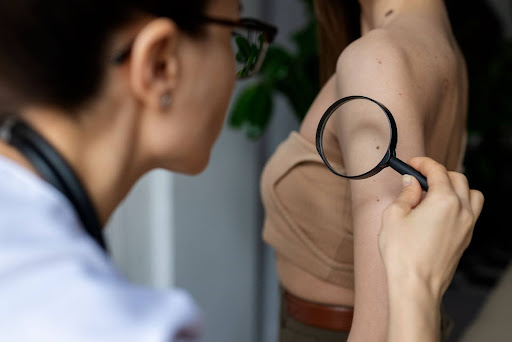
- Dermatoscopic assessment: The doctor examines the mole using a dermatoscope, a specialised magnifying device that allows detailed assessment of structures beneath the skin.
- Checking for concerning features: The clinician will assess for changes in size, shape, or colour, as well as itching, crusting, flaking, bleeding, or rapid growth. If any concerning signs are identified, you will be advised to see your NHS GP for urgent assessment rather than proceeding with cosmetic removal.
- Choosing the correct removal technique: If the mole is suitable for removal, the clinician will recommend the most appropriate technique based on the mole’s size, depth, and location.
Mole Removal Procedure
Mole removal at Waverley Park follows a structured, step-by-step process designed to ensure safety, accuracy, and the best possible outcome.
- Local anaesthetic: Once you decide to proceed, the area around the mole is numbed with local anaesthetic.
- Mole removal: The removal itself usually takes around 30 minutes. The doctor performs either a shave removal or a surgical excision, depending on what was agreed during your consultation.
- Dressings and aftercare: A sterile dressing is applied, and you receive clear, written instructions on how to care for the area. Proper aftercare helps support healing and minimise the appearance of scarring.
- Pathology testing: The removed tissue is sent to a local pathology laboratory to confirm the diagnosis. Your NHS GP is informed of the result, so your medical records remain accurate and complete.
Aftercare Following Mole Removal
Proper aftercare is important for minimising discomfort, preventing infection, and achieving the best cosmetic results. After your mole removal, a sterile dressing will be applied, and you should keep the area clean and dry for the first day or two, following the specific instructions provided by your clinician.
If stitches were used during excision, they will typically need to be removed between 5 and 14 days. You may be advised to avoid heavy exercise or activities that put tension on the wound, especially if the mole was large or in a high-movement area.
Once the wound has healed, protecting the area from sun exposure is crucial. UV rays can darken new scar tissue, so covering the site or using high-factor sunscreen will help minimise long-term discoloration and support the smoothest healing possible.
Why Choose Waverley Park Minor Surgery Clinic for Mole Removal?
Waverley Park Minor Surgery Clinic in Glasgow provides safe, medically supervised mole removal in a professional and reassuring environment. Our experienced GPs focus on patient comfort, medical safety, and reliable cosmetic outcomes.
Medically Led, Comfortable Care
With over 20 years of experience in minor surgery, our clinicians are skilled in pain control, precise technique, and gentle tissue handling to keep discomfort to a minimum.
Personalised Assessment and Treatment
Every mole is assessed individually, and the most appropriate removal method is chosen to balance comfort, safety, and cosmetic results. We take time to explain each step so you know exactly what to expect.
Clear Aftercare and Ongoing Support
Patients receive clear guidance on wound care, managing temporary soreness, and protecting healing skin, with ongoing support to ensure a smooth recovery and optimal results.
[/vc_column_text][/vc_column][/vc_row]
Frequently Asked Questions
Is at-home mole removal safe?
At-home mole removal is not safe and is strongly discouraged by medical professionals. Attempts to remove the mole yourself using cutting, burning, freezing, or tying methods are not sterile and carry a high risk of infection, scarring, and incomplete removal.
Can you tie off a mole like a skin tag?
No, moles should never be tied off or removed at home. Unlike skin tags, moles can contain deeper cells and may be potentially cancerous. Attempting to remove a mole yourself, whether by tying, cutting, freezing, or burning, carries serious risks, including infection, scarring, incomplete removal, and missed early diagnosis of skin cancer. Professional assessment and medical removal are essential for safety.
Are there any risks with mole removal?
Professional mole removal is generally very safe, but minor risks can include temporary redness, swelling, bruising, or scarring. These risks are greatly reduced in a clinical setting using sterile instruments and trained practitioners. DIY mole removal carries much higher risks, including infection, irregular or permanent scarring, incomplete removal, and failure to detect melanoma.
How do I know if a mole is cancerous?
It is not possible to determine whether a mole is cancerous without professional assessment. Doctors use the ABCDE criteria to identify concerning moles. Any mole that bleeds, itches, crusts, or changes should be assessed by a healthcare professional and, if removed, sent for biopsy to confirm whether it is benign or malignant.
When should I see a doctor about my mole?
You should see your GP if a mole changes in size, shape, or colour, becomes painful, itchy, inflamed, crusty, or starts bleeding, appears different from your other moles, or is a new or unusual mark that does not heal after a few weeks. Early assessment is important because detecting melanoma at an early stage makes treatment simpler, safer, and more effective.
[…] minor surgical procedures, yet many people delay seeking advice due to uncertainty around cost, pain, scarring, and safety. Whether your concern is medical, cosmetic, or simply a matter of peace of […]
Reply