
Is It Worth Getting a Lipoma Removed?
Is It Worth Getting a Lipoma Removed?
Lipomas are common, benign fatty lumps that develop just beneath the skin. While they are usually harmless and do not require medical treatment, many people still consider removal for comfort, reassurance, or cosmetic reasons.
If you are deciding whether private lipoma removal is worth it, understanding why people choose removal, what outcomes to expect, and how the procedure is carried out can help you make an informed choice.
What Is a Lipoma?
A lipoma is a slow-growing, non-cancerous lump made up of fatty tissue that develops just beneath the skin, with studies suggesting that lipomas affect approximately 2.1 per 1,000 individuals per year.
Lipomas are very common and typically:
- Feel soft and smooth
- Move easily under the skin
- Are usually painless
- Appear on the back, shoulders, arms, abdomen, or thighs
Lipomas can remain small for many years or gradually increase in size over time. They are generally harmless and do not spread to other parts of the body.
The exact cause of lipomas is not fully understood, but there appears to be a genetic component. Around two-thirds of lipomas demonstrate genetic abnormalities, and people with a family history may be more likely to develop multiple lipomas. Lipomas are not related to acne, infections, or inflammatory skin conditions.
When Lipoma Removal Is Not Medically Necessary
From a medical perspective, most lipomas do not need treatment. The NHS will usually only consider removal if:
- The diagnosis is uncertain
- The lump is painful, rapidly growing, or restricting movement
- There is concern about an alternative diagnosis
If a lipoma is small, painless, and not causing distress, monitoring alone is often appropriate.
When Lipoma Removal Can Be Worthwhile
Many patients choose lipoma removal at private clinics, including Waverley Park Minor Surgery Clinic, for the following reasons:
Cosmetic Concerns
Lipomas can be noticeable under clothing or create visible asymmetry, particularly on the:
- Arms and shoulders
- Neck
- Upper back
Larger or prominent lipomas may affect self-confidence. Removal can restore a more natural contour and improve comfort in everyday situations.
Pain or Physical Discomfort
While many lipomas are painless, some can cause symptoms depending on their size and location. A lipoma may:
- Rub against clothing
- Become sore when pressed
- Catch during exercise or when lying down
- Restrict movement if located near joints
If a lipoma presses on nearby nerves or blood vessels, removal can relieve discomfort and prevent worsening symptoms.
Diagnostic Uncertainty and Peace of Mind
Even when a lump appears benign, uncertainty can be unsettling. Removal allows the tissue to be sent for laboratory analysis to:
- Confirm the diagnosis
- Rule out rare but more serious conditions such as liposarcoma
This provides reassurance and eliminates the need for ongoing observation.
Growth or Change Over Time
A lipoma may warrant removal for assessment if:
- Increasing in size
- Changing in shape or firmness
- Becoming more noticeable
Earlier intervention often allows for a smaller incision and a more discreet scar.
At Waverley Park Minor Surgery Clinic, lipoma removal is performed using precise, medically led techniques with careful attention to comfort, healing, and scar minimisation. Patients receive clear guidance and support throughout the process, from assessment to recovery.
What Happens During a Lipoma Removal Consultation?
Your initial consultation is an important step in deciding whether lipoma removal is appropriate. It allows the doctor to confirm the diagnosis, address concerns, and explain the procedure clearly before any treatment takes place.
During the consultation, the doctor will:
- Examine the lump: Assess the size, location, texture, and mobility to confirm it is consistent with a lipoma.
- Review your medical history: This includes general health, medications, previous surgery, and any symptoms such as pain or rapid growth.
- Assess the need for further tests: In some cases, imaging such as an ultrasound scan may be recommended to confirm the diagnosis or assess deeper lesions.
- Explain treatment options: Surgical excision is discussed in detail, including how the procedure is performed under local anaesthetic.
- Discuss benefits and risks: This includes expected outcomes, potential complications, scarring, and recovery time.
- Set realistic expectations: Healing, scar appearance, and aftercare requirements are explained so you can make a fully informed decision.
How Is a Lipoma Removed?
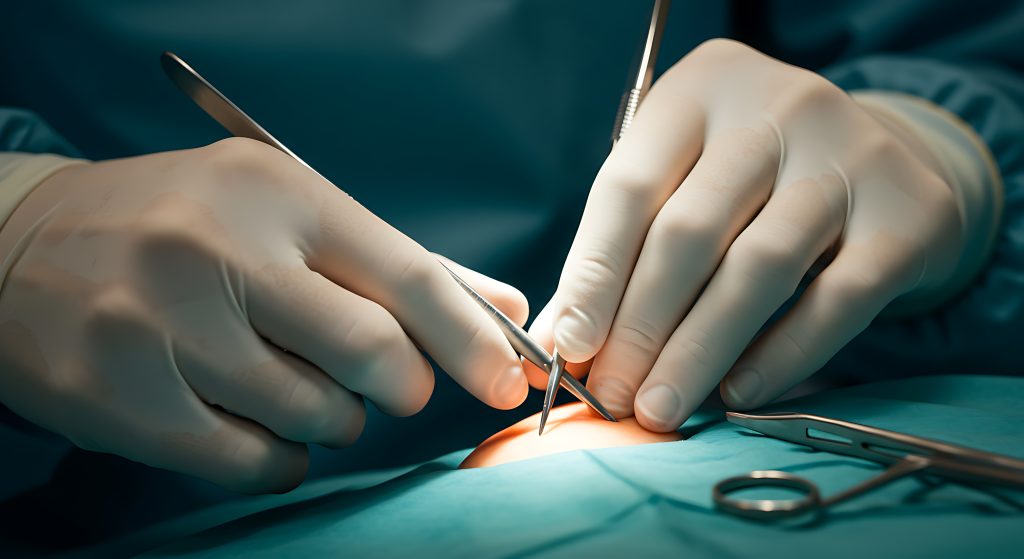
Lipoma removal is most commonly performed using surgical excision, which allows the lump to be removed intact and confirms the diagnosis.
The procedure:
- Is carried out under local anaesthetic, which numbs the area around the lipoma while you remain awake and comfortable
- Typically takes 30–60 minutes, depending on the size and location of the lipoma
- Involves a small incision in the skin, through which the lipoma is carefully dissected and removed in one piece
- Ends with meticulous wound closure using sutures, with special attention paid to minimising tension and scarring to support optimal healing
The removed tissue is sent to a local pathology laboratory to confirm the diagnosis, and the results are shared with your GP once available.
Lipoma Removal Aftercare
Aftercare plays an important role in the final result and usually involves:
- Keeping the wound clean and dry for the first few days
- Following instructions on dressing changes and gentle cleaning
- Avoiding heavy lifting or strain that could stress the wound
- Managing mild discomfort with over-the-counter pain relief if needed
Most patients are able to return to normal daily activities within a few days, although the scar itself continues to mature and improve over a longer period.
Cosmetic Outcome and Scarring
Scarring is a common concern with lipoma removal, but cosmetic outcomes are generally very good. In most cases:
- A single fine linear scar is expected
- Scar length depends on the size and depth of the lipoma removed
- Precise surgical technique and careful wound closure help reduce tension and support optimal healing
Over time, scars typically soften and fade. For many patients, the cosmetic benefit of removing a visible lump outweighs the appearance of a small scar.
Why Choose Waverley Park Minor Surgery Clinic for Lipoma Removal?
Waverley Park Minor Surgery Clinic provides medically led lipoma removal in a calm, professional setting, with a strong focus on patient comfort, accurate diagnosis, and favourable cosmetic outcomes. Every stage of care is designed to support safe removal, predictable healing, and long-term reassurance.
Experienced Minor Surgery Clinicians
Our GPs have extensive experience in minor surgical procedures, including lipoma excision. Using evidence-based techniques, careful tissue handling, and effective local anaesthesia, we remove lipomas safely while minimising trauma to surrounding skin and reducing the risk of recurrence.
Individualised Assessment and Treatment Planning
Each lipoma is assessed on its own merits, taking into account size, location, depth, symptoms, and cosmetic concerns. This allows us to plan the most appropriate surgical approach, discuss expected scarring and recovery, and ensure removal is both medically appropriate and cosmetically considered.
Attention to Healing, Scarring, and Aftercare
Clear, practical aftercare advice is provided to support healing and minimise scarring. This includes guidance on wound care, activity modification, stitch removal when required, and scar management. Ongoing support during recovery helps promote smooth healing and optimal long-term results.
Frequently Asked Questions
What is the main cause of a lipoma?
The exact cause of lipomas is not fully understood. However, they are thought to have a genetic component, as lipomas often run in families. Minor trauma may occasionally draw attention to a lipoma, but it does not cause one to form. Lipomas are not related to lifestyle, diet, infections, or skin conditions.
When should a lipoma be removed?
A lipoma may be worth removing if it becomes painful, continues to grow, restricts movement, or causes cosmetic concern. Removal is also recommended if there is any uncertainty about the diagnosis, as excision allows the tissue to be examined and more serious conditions to be ruled out. Many patients choose removal for reassurance or comfort, even when the lipoma is benign.
How much does it cost to remove a lipoma in the UK?
At Waverley Park Minor Surgery Clinic, lipoma removal is priced at £500. The initial consultation fee is £50, which is fully deducted from the cost of the procedure should you choose to proceed.
Do lipomas grow back after removal?
When a lipoma is completely removed using surgical excision, recurrence is uncommon. Removing the lipoma intact, including its capsule, significantly reduces the chance of it returning. In rare cases, new lipomas may develop elsewhere, particularly in individuals prone to multiple lipomas.
Is lipoma removal painful?
Lipoma removal is performed under local anaesthetic, so the area is fully numbed during the procedure. Most patients feel pressure rather than pain while the lipoma is removed. Mild soreness or tightness afterward is normal and usually well controlled with simple pain relief. Discomfort typically settles within a few days.
Leave a reply