
Can You Remove a Cyst Without Surgery?
If you have discovered a lump under your skin, it is natural to wonder whether you can deal with it yourself. Many people search for ways to remove a cyst at home, especially if it feels uncomfortable or looks noticeable.
While it may be tempting to try a DIY approach, safely removing a cyst without surgery is not usually possible. Attempting to squeeze, drain, or cut a cyst yourself can lead to infection, inflammation, and scarring, and often makes the problem worse.
In this article, we explain why home removal is not recommended, what actually works, and when to consider professional cyst removal.
What Is a Cyst?
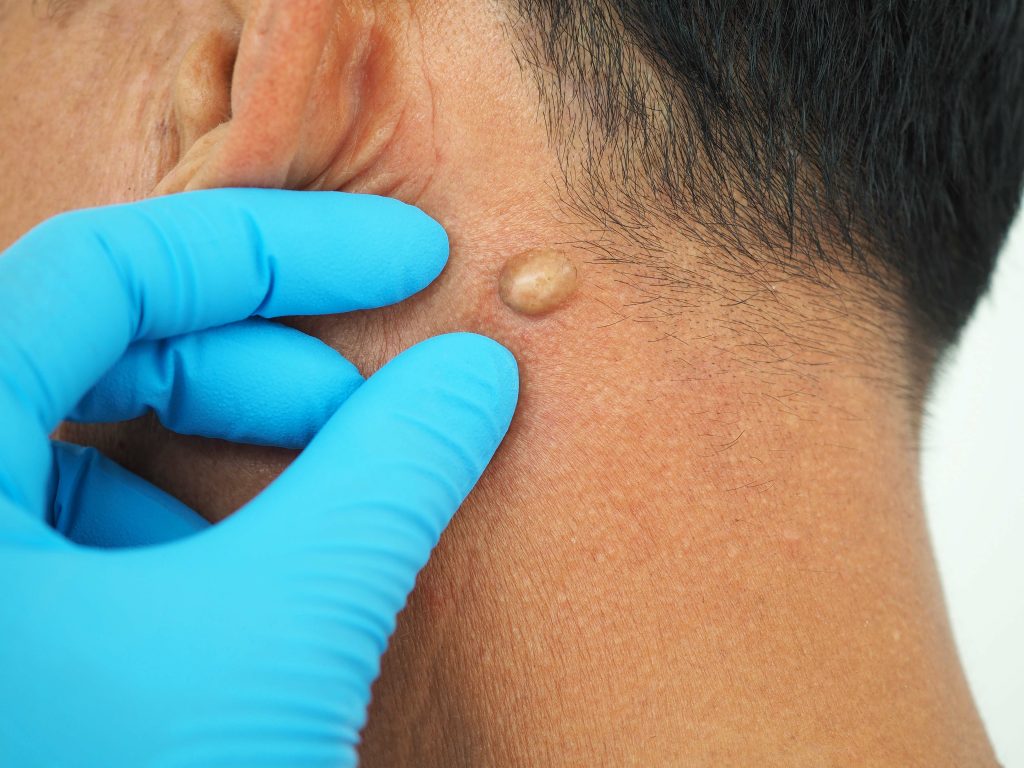
A skin cyst is a round lump that forms just beneath the surface of the skin. It is usually filled with fluid, pus, or keratin. Most skin cysts are harmless and grow slowly, and many do not require urgent treatment.
Cysts can develop almost anywhere on the body, but are commonly found on the scalp, face, neck, and back.
Common Features of a Skin Cyst
Skin cysts typically:
- Are round or dome-shaped lumps under the skin
- Often contain fluid or thicker material
- May have a small dark spot in the centre, known as a punctum
- Grow slowly over time
- Vary in size from smaller than a pea to several centimetres across
- Can become sore, red, or tender if infected
Redness and inflammation may be less visible on black or brown skin, which can sometimes delay recognition of infection.
Types of Skin Cysts
Several different types of cyst can develop beneath the skin. Identifying the type of cyst is important, as this influences whether treatment is needed and the most appropriate method of removal.
Epidermoid Cysts
Epidermoid cysts are by far the most common type, accounting for around 80 to 90% of skin cysts. They form when skin cells multiply beneath the surface rather than shedding normally.
Over time, keratin builds up inside the sac, creating a smooth, round lump that may have a small central opening. They can remain stable for years but may also enlarge, rupture, or become infected.
Sebaceous Cysts
Often used as a general term, sebaceous cysts develop from oil-producing glands. In reality, many lumps described as sebaceous cysts are actually epidermoid cysts. True sebaceous cysts are less common but can behave in a similar way, slowly increasing in size and occasionally becoming inflamed.
Pilar Cysts
These typically develop from hair follicles and are most often found on the scalp. They tend to feel firm and smooth and can sometimes run in families. While usually painless, they may become uncomfortable if they catch when brushing or washing the hair.
Ganglion Cysts
Ganglion cysts are noncancerous lumps that most commonly develop near joints or tendons, particularly in the wrist or hand. In fact, they are the most common soft-tissue mass in this region, accounting for approximately 60% to 70% of all hand and wrist masses.
Unlike skin cysts, ganglion cysts arise from joint capsules or tendon sheaths and are filled with a clear, jelly-like (viscous synovial) fluid. They may fluctuate in size over time and can occasionally cause discomfort, weakness, or limited range of motion depending on their size and location.
Can a Cyst Go Away on Its Own?
Some cysts can go away on their own. However, the process is often slow and unpredictable.
Common types such as epidermoid skin cysts and ganglion cysts may gradually shrink, drain spontaneously, or fluctuate in size over months or even years. In some cases, the body slowly reabsorbs the fluid inside the cyst.
An important point to understand is that even if a cyst flattens or drains, the cyst wall, or sac, often remains beneath the skin. When the sac is still present, the cyst can refill and return. This is why recurrence is common if the entire cyst lining is not removed.
When a Cyst Is Unlikely to Resolve
A cyst is less likely to go away permanently if it becomes:
- Repeatedly inflamed
- Infected, especially if it is red, warm, painful, or draining pus
- Rapidly growing
- Restricting movement, which can happen with ganglion cysts
- Frequently recurring
In these situations, medical treatment may be needed to prevent ongoing discomfort or complications.
Is It Safe to Squeeze or Pop a Cyst?
Although a cyst may look like a pimple or boil, it is very different. A cyst is a closed sac beneath the skin, lined with a thin membrane and filled with fluid or semi-solid material. When you squeeze it, you are not removing the root of the problem.
What Happens When You Squeeze a Cyst
- The contents can be forced deeper into surrounding tissue
- Inflammation often worsens
- Bacteria can enter through broken skin, increasing infection risk
- Pain and swelling may intensify
- Permanent scarring becomes more likely
- Future surgical removal can become more complicated
Even if material drains out, the cyst lining remains under the skin. Because the sac is still intact, the cyst often refills and returns.
Real Risks of Popping a Cyst
Home squeezing increases the chance of:
- Infection: Breaking the skin introduces bacteria. This can lead to redness, warmth, pus formation, and sometimes spreading infection.
- Scarring: Forceful pressure damages surrounding tissue, increasing the likelihood of permanent marks or discoloration.
- Recurrence: Unless the entire cyst wall is professionally removed, the cyst will likely come back.
Do Home Remedies Remove Cysts?
It is common to search for natural or at-home solutions when you notice a cyst. You may see suggestions such as warm compresses, tea tree oil, apple cider vinegar, or other topical treatments. While some of these methods may ease discomfort, they do not remove a cyst at its source.
A cyst is a structured sac beneath the skin with a defined lining. As long as that lining remains, the cyst has the ability to refill.
What Home Remedies Can Do
- Warm compresses: These can improve circulation to the area and sometimes encourage limited drainage if the cyst is inflamed. They may reduce tenderness and swelling temporarily.
- Topical oils or natural products: Products like tea tree oil are sometimes used for their antibacterial properties. However, there is no strong medical evidence showing they eliminate the cyst wall or prevent recurrence.
What Home Remedies Cannot Do
- Remove the cyst sac
- Prevent the cyst from refilling
- Permanently cure the cyst
- Safely treat a deep infection
At best, home remedies may provide temporary symptom relief. At worst, repeated irritation from strong topical products can inflame the skin further.
When to Seek Medical Advice
You should seek evaluation if the cyst becomes:
- Painful
- Red or warm
- Rapidly enlarging
- Draining pus
- Recurrent
- Interfering with movement or daily activities
What Is the Most Effective Way to Remove a Cyst?
If your goal is permanent removal, the most effective treatment is complete surgical excision under local anaesthetic.
Unlike drainage or home remedies, surgical excision removes the entire cyst, including its wall. This is the critical step. When the sac is fully removed, the likelihood of the cyst returning is significantly reduced.
Your Initial Consultation
During your consultation at Waverley Park Minor Surgery Clinic in Glasgow, a qualified doctor will carefully examine the cyst and discuss your concerns and expectations.
You will receive clear information about:
- The treatment option
- The procedure itself
- Possible side effects
- Expected outcomes
- Scarring risks
- Aftercare instructions
This ensures you feel informed and confident before proceeding.
What Happens During the Procedure
Cyst removal is a minor surgical procedure performed in a clinical setting.
- The area is fully numbed with local anaesthetic to ensure comfort
- A small, precise incision is made
- The entire cyst, including its lining, is carefully removed
- The wound is closed to support optimal healing
Because the full sac is removed, this approach offers the most reliable long-term result.
After the Cyst Is Removed
The excised tissue is sent to a local pathology laboratory to confirm the diagnosis. Your GP is informed of the results, providing continuity of care and reassurance.
You will receive detailed aftercare guidance to promote smooth healing. Recovery time varies depending on the size and location of the cyst, but following proper wound care instructions plays an important role in minimising scarring and supporting the best cosmetic outcome.
Why Choose Waverley Park Minor Surgery Clinic for Cyst Removal?
Waverley Park Minor Surgery Clinic provides safe, medically supervised cyst removal in a calm and professional clinical setting. Our experienced GPs focus on thorough removal, patient comfort, and optimal healing to reduce the risk of recurrence.
Medically Led, Precise Surgical Care
With over 20 years of experience in minor surgery, our clinicians are highly skilled in complete cyst excision. Careful surgical technique and effective local anaesthesia ensure the procedure is comfortable, controlled, and focused on removing the entire cyst sac to minimise the chance of it returning.
Personalised Assessment and Treatment Planning
Every cyst is carefully examined before treatment. We assess its size, location, and any signs of inflammation or infection to determine the most appropriate surgical approach. You will receive a clear explanation of the procedure, expected healing time, potential scarring, and realistic outcomes so you feel fully informed and confident.
Focus on Comfort and Cosmetic Outcome
Our approach balances medical thoroughness with cosmetic awareness. Gentle tissue handling, precise closure techniques, and detailed aftercare advice all contribute to smooth healing and reduced scarring wherever possible.
Clear Aftercare and Ongoing Support
You will receive straightforward guidance on wound care, managing temporary tenderness, and recognising normal healing changes. Our team remains available should you have any questions during recovery.
Frequently Asked Questions
What happens if you never remove a cyst?
Many cysts remain harmless and stable for years without treatment. However, some may gradually enlarge, become inflamed, or develop infection over time. Larger cysts can cause discomfort or cosmetic concern depending on their location. If a cyst changes in size, appearance, or symptoms, medical assessment is recommended.
Will the NHS remove a cyst?
The NHS may remove a cyst if there is a clear medical reason, such as infection, pain, rapid growth, or diagnostic uncertainty. Cysts that are purely cosmetic and not causing symptoms are less likely to be routinely treated. Access can also depend on local referral guidelines and waiting times. Many patients choose private removal for quicker access and planned treatment.
What happens if I remove a cyst myself?
Attempting to squeeze or cut out a cyst yourself can push contents deeper into the tissue and increase the risk of infection. Because the cyst wall remains under the skin, it will likely refill and return. Home removal also raises the risk of scarring and abscess formation. Professional removal is safer and significantly reduces complications.
At what point does a cyst need to be surgically removed?
Surgical removal is usually advised if a cyst becomes painful, infected, rapidly enlarges, or repeatedly returns. It may also be recommended if the diagnosis is uncertain or the cyst interferes with daily activities. Complete excision removes the cyst wall and significantly reduces recurrence risk. A medical consultation helps determine the most appropriate timing.
How painful is removing a cyst?
Cyst removal is performed under local anaesthetic, so the procedure itself should not be painful. You may feel a brief stinging sensation during the numbing injection. Mild soreness or tightness can occur for a few days afterward. Most patients tolerate the procedure well and resume normal activities shortly after.
Leave a reply